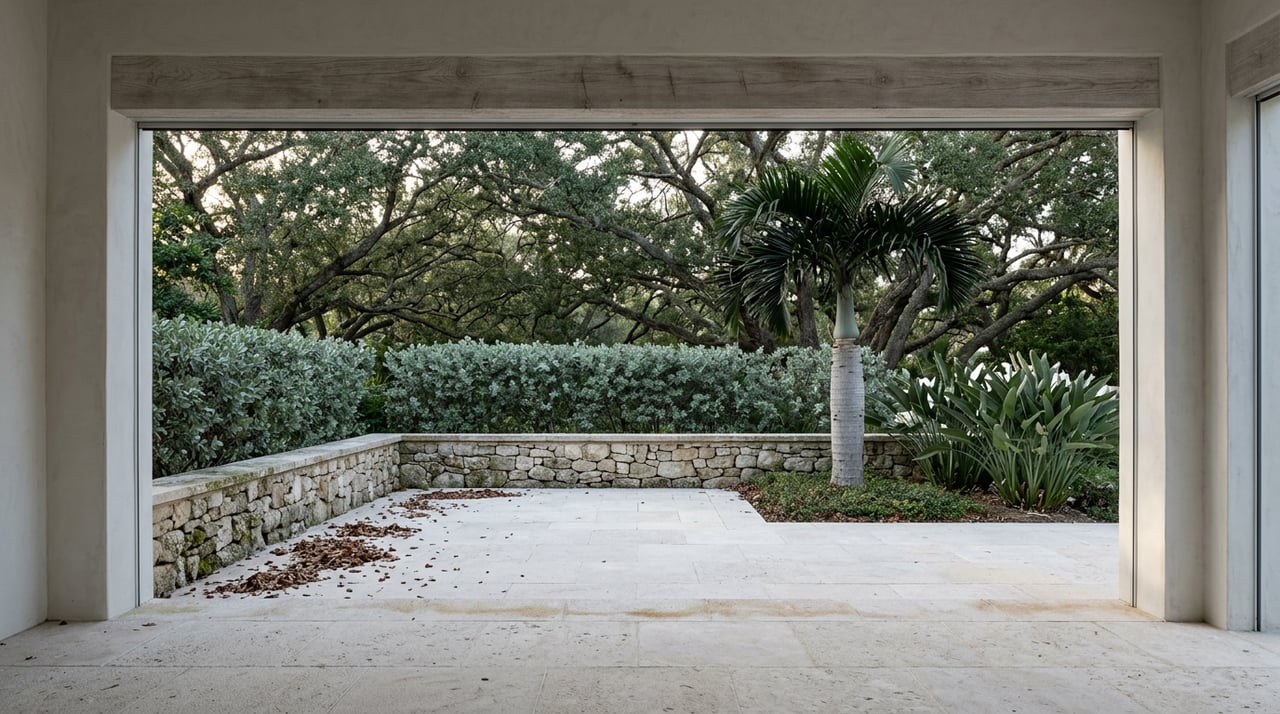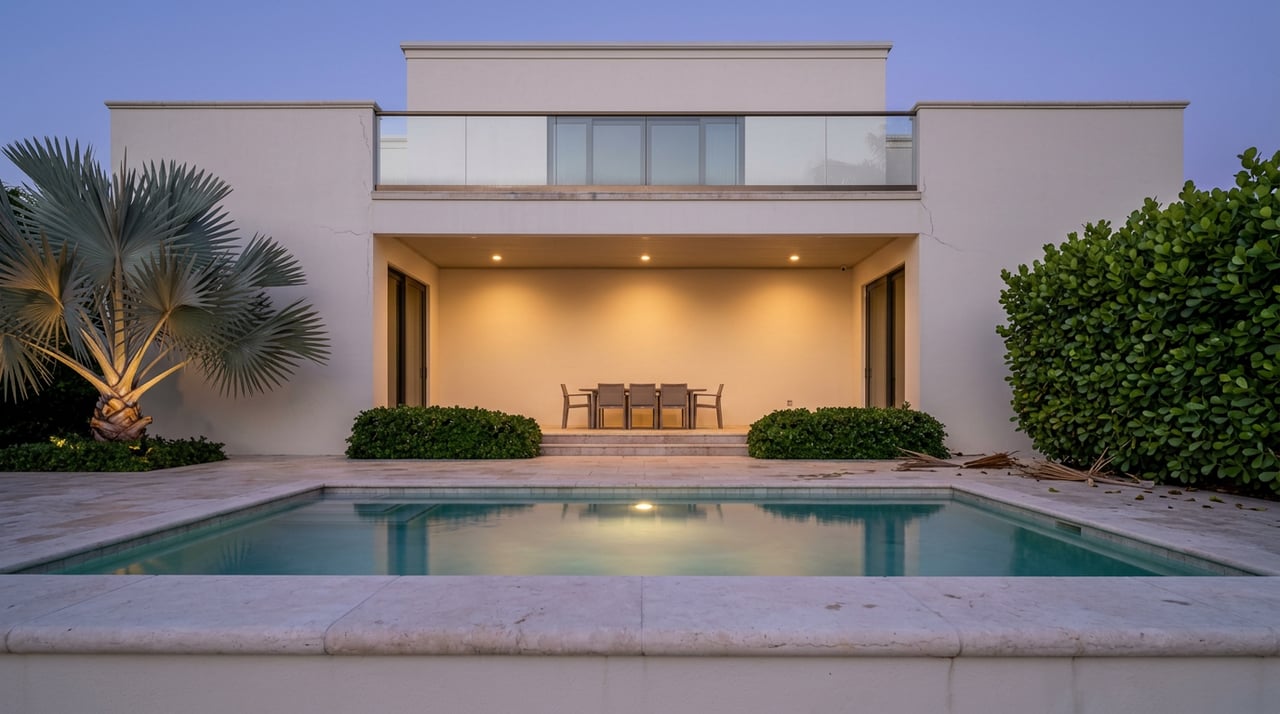
Drive down Gordon Drive this week and the hedges along the club's frontage still do their job. You catch a crane, a stretch of scaffolding, a glimpse of raw concrete where the pool deck will eventually sit, then the greenery closes back over it. What you cannot see from the road is the paper trail behind that construction site, and that paper trail tells a more interesting story than the fence line does.
Here is the claim worth sitting with: the Port Royal Club has not slipped its opening date once. It has slipped it at least twice, on the record, in public documents the club and the city both put their names to. And each time it moved, it moved in the same direction. Later. Never earlier.
What the Club Told Its Own Members in 2023
Start with the club's own paperwork. Before a single wall of the old clubhouse came down, the Port Royal Club published a member-facing timeline that was specific down to the month. Construction and demolition were set to begin in the summer of 2024. Grand opening: summer 2026. Two years, one season to the next, laid out in a flipbook brochure any member could read.
The budget was just as precise. The club broke its hundred-million-dollar reconstruction into three lines: $76.1 million for the main building, sitework, parking structure, kitchen equipment, and furnishings; $14.2 million for architects, engineers, and other professional services; and a $9.7 million contingency fund sitting on top, in case any of that first estimate ran short. That contingency line matters. A club that budgets nearly ten million dollars against its own uncertainty is a club that expects some slippage. It just did not expect the slippage to show up in the calendar as often as it has.
The Season That Kept Moving
The first sign came almost immediately. Naples City Council approved the project's conditional-use petition on Aug. 21, 2024, clearing the last major hurdle before construction permits. Coverage of that same approval, published within days, already described the completion target as "late 2026," a softer phrase than the brochure's clean "summer 2026." Nobody called it a delay at the time. It read as a rounding error, the kind of vague hedge contractors use before ground is even broken.
By this spring, the hedge had become explicit. An update in March 2026 stated plainly that the opening had shifted from an earlier summer 2026 target to fall 2026, and framed it as new information worth knowing rather than a minor adjustment. That is two documented moves in under two years: a firm summer date softened to "late" within weeks of approval, then that vague "late" clarified into "fall" as the actual season approached. Today is Aug. 30, 2026. Fall starts in three weeks. Whatever opens this fall will be arriving at the very edge of the window the club itself set five months ago.
None of this means the project is behind in any dramatic sense. Big beachfront reconstructions rarely land on their first projected date, and the club's own contingency planning shows they knew that going in. What it does mean is that anyone treating the current "fall 2026" figure as a hard finish line should treat it the way the club's own record suggests: as the newest in a short line of dates, not the last one.
The Building Two Sets of Records Disagree On
There is a second discrepancy worth naming plainly, because it shows up in the club's own materials as much as anywhere else. The clubhouse brochure and the general contractor's own project page both describe a 62,000-square-foot, two-story building. Coverage of the same August 2024 council approval describes something different: a three-level clubhouse that grew, over the course of the entitlement process, from an original 32,000-square-foot proposal to 77,000 square feet.
Both figures are on the record. Both come from sources with every reason to get the number right. The most likely explanation is that they describe different points in the design's evolution, an earlier concept versus the version that actually cleared council, but neither the club's marketing materials nor the news coverage reconciles the gap in plain language. If you are the kind of resident who tracks these things closely enough to notice, it is worth knowing the number attached to "the new club" depends heavily on which document you are reading.
The Neighbor Who Redrew the Plans
The council hearing that finally cleared the project ran roughly ten hours, and most of that time went to one dispute: a beachfront neighbor just south of the club objected to the design on noise, height, traffic, lighting, and smell grounds. Before the hearing even opened, the club had already made $2 million in design changes to address the neighbor's concerns and had moved the pool 80 feet farther from the property line, from 10 feet away to 90.
It was not enough to settle everything. The neighbor wanted a 20-foot privacy wall and a private gate. City code caps residential walls at six feet, and council granted a waiver allowing 11, passing that vote 5-2 with Mayor Teresa Heitmann and council member Linda Penniman opposed. Vice Mayor Terry Hutchison, arguing against the larger wall the neighbor wanted, called it "the Berlin Wall times two" and pointed out that even the sound barriers along Interstate 75 only run 22 feet. The same meeting split differently on outdoor dining, approved 6-1 with Hutchison this time the lone no vote, a reminder that the council's sympathies did not fall neatly on one side of the dispute.
The building itself grew in the air for reasons that had nothing to do with the neighbor fight. What started as a 30-foot structure reached 48.6 feet once the club's engineers and city planners factored in base flood elevation, storm velocity, and wind surge, the same hurricane-driven math that is reshaping construction across coastal Collier County. Council attached real conditions to the final approval regardless: the third level's after-dinner lounge balcony facing south must be enclosed, the second-level sunset bar's sliding doors must close once the space hits half capacity, and three confirmed noise violations within twelve months send the club back in front of council to answer for them.
What the Assessment Actually Bought
Members felt the cost directly. The club assessed each of them $45,000 on Aug. 1, 2024, with an option to spread the payment over five annual installments running through 2028. Membership is capped at 700, and the price and the wait pushed 45 members to leave. In a letter to the membership dated Aug. 9, Club President Nancy Carlson noted that 85 percent of those who resigned were over 70. Twenty-three residents on the waiting list stepped into the openings that created.
That detail is worth sitting with longer than the dollar figure. A rebuild expensive enough to push out longtime members, and immediately backfilled by residents willing to pay in anyway, says something about how tightly membership demand tracks the address itself, independent of what the clubhouse looks like when it finally opens.
The Season Everyone Is Actually Watching
In an ordinary year, none of this would matter much. The club has long run on its own rhythm, open from mid-August through the following July, closed for a single month in between. This year that rhythm is not ordinary. The last confirmed public update points to a fall opening, and fall is not a future season anymore. It starts in three weeks.
The honest way to read the record is not "the club will open this fall" or "the club will miss another deadline." It is that every checkpoint so far, from the 2023 brochure to the August 2024 approval to the March 2026 correction, has moved the date later and never earlier, while the building itself grew larger at nearly every stage the paperwork was reexamined. That pattern, more than any single date, is the thing worth watching as the season turns.
If you live inside the gates and want someone who tracks this kind of detail as closely as you do, Lynna Follis has been following Port Royal's rhythms for 25 years and is always glad to talk through what's actually changing in the neighborhood, club timeline included.